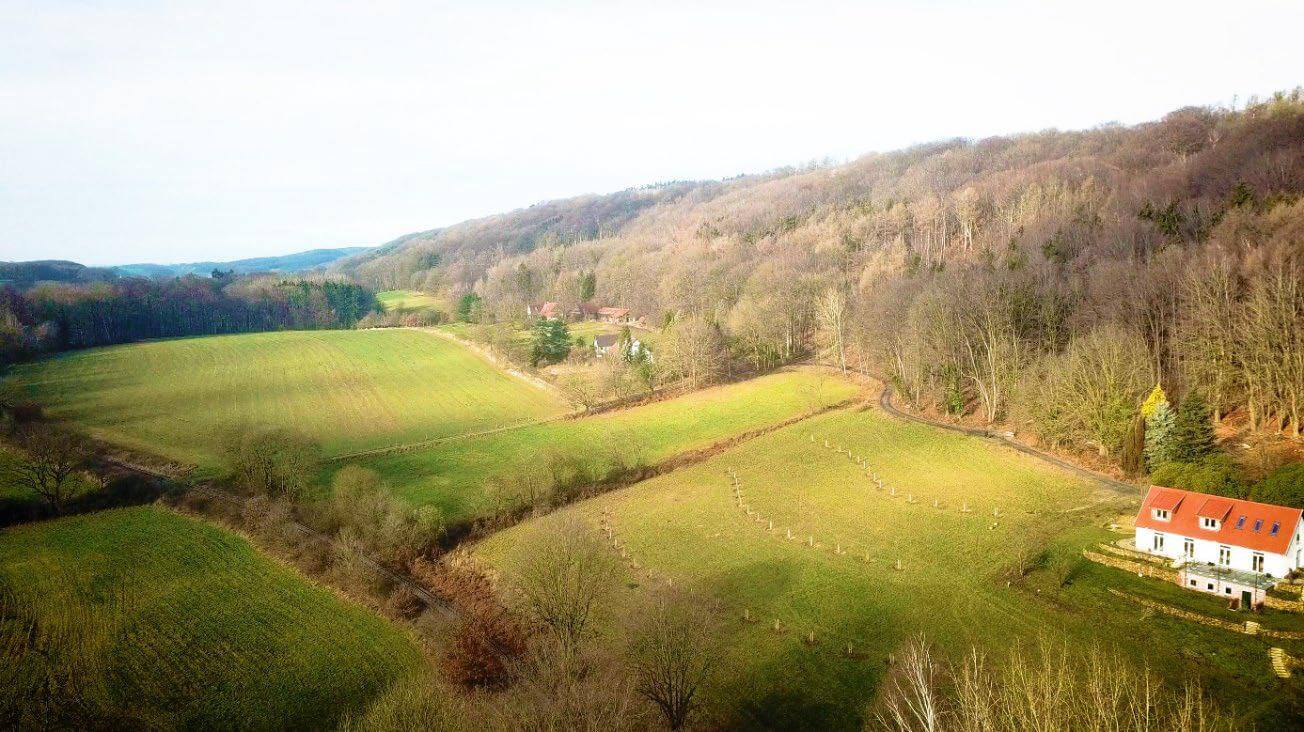
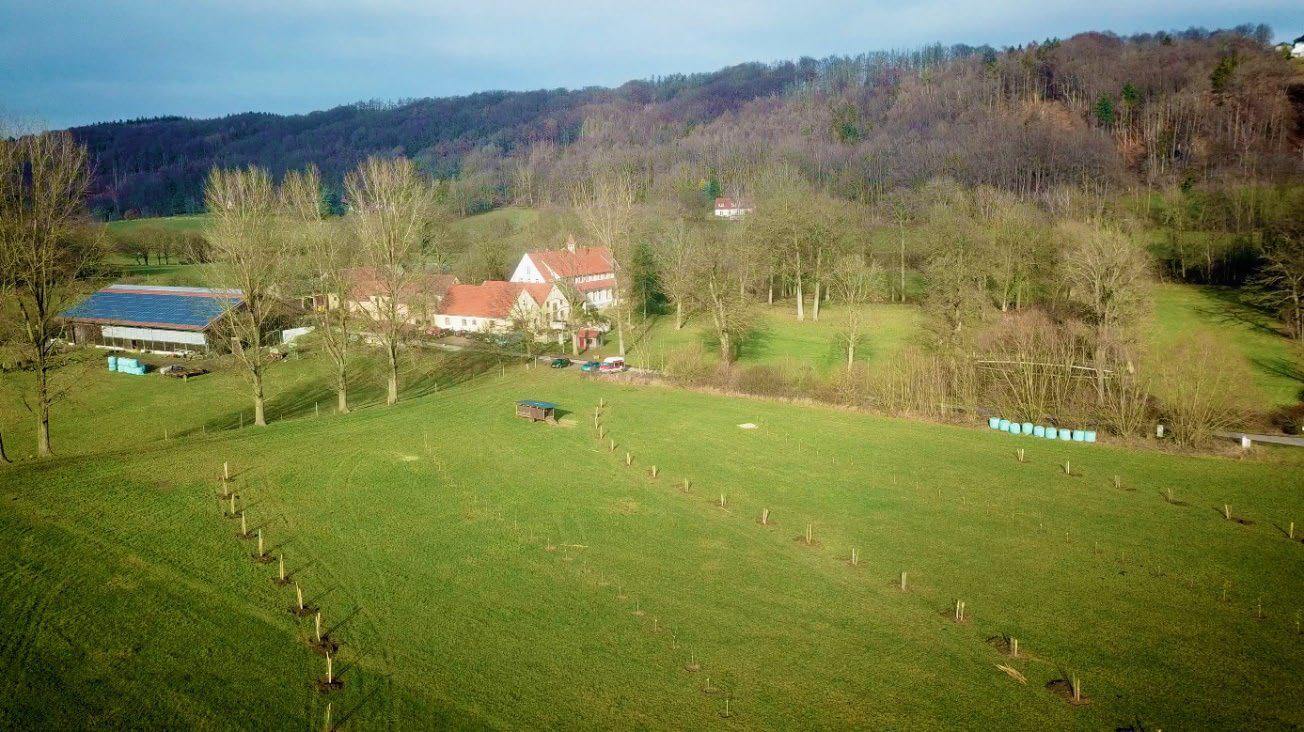
The Bioland-certified farm cultivates 30 hectares of arable land and grassland and keeps laying hens, goats, a few young cattle and bee colonies. Milk is processed in the farm’s own cheese factory. After ten years of closure, the farm is now being revitalised by four young people working together.
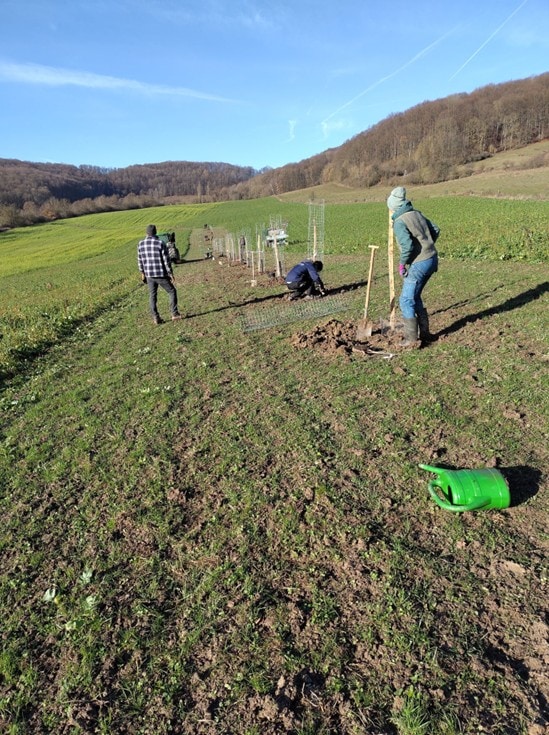
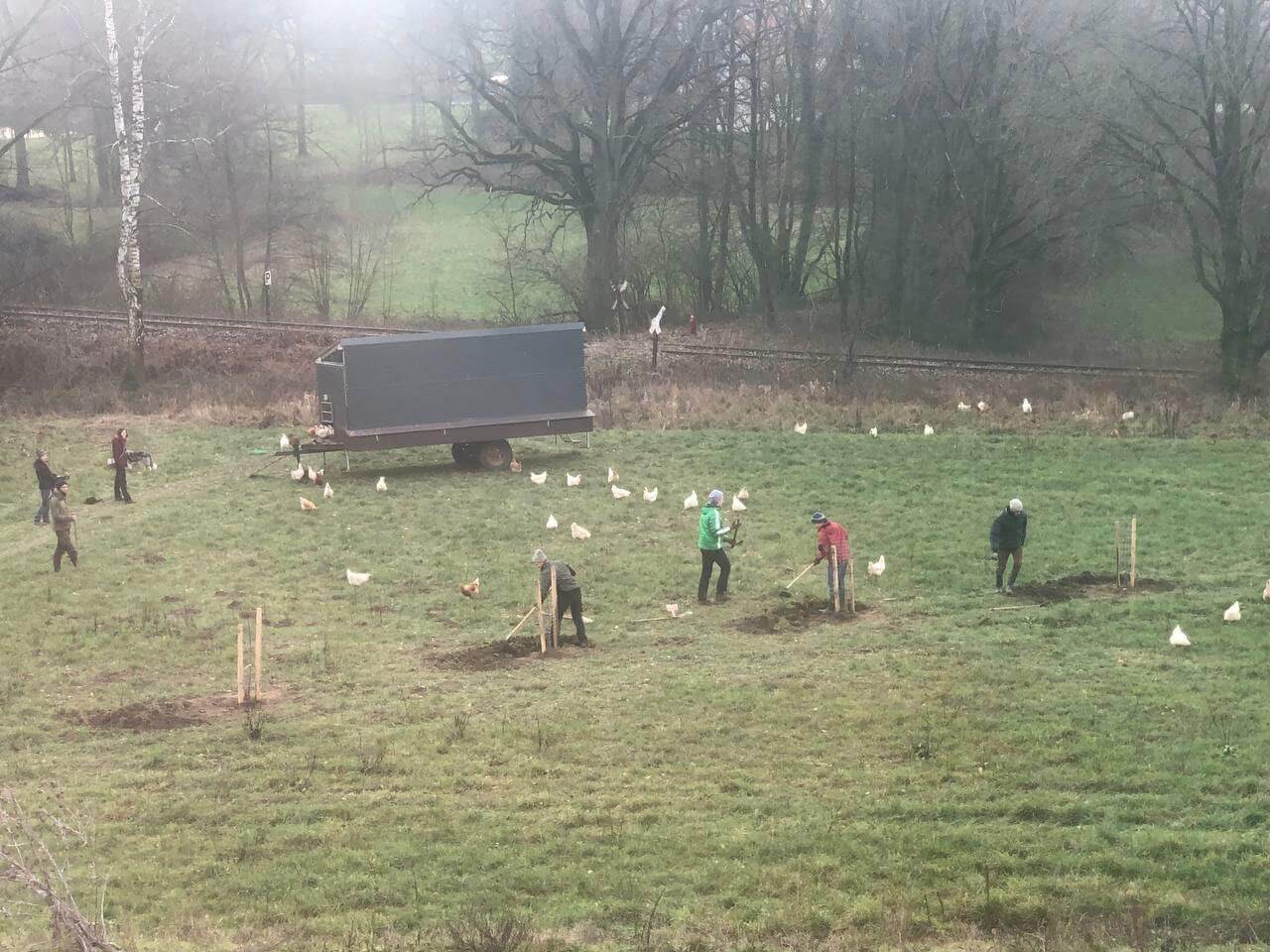
An agroforestry system is now to make the farm more crisis-proof, diversified and ecological. The following trees were therefore planted at the end of January 2023:
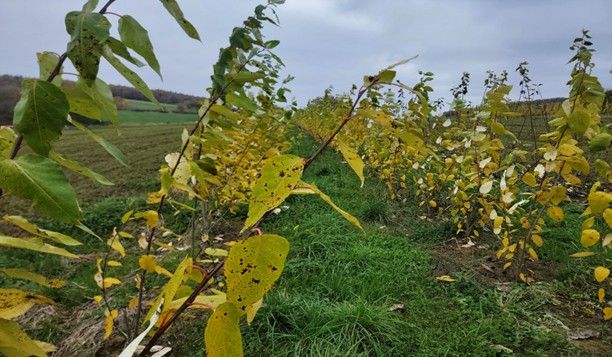
- 98 walnut trees
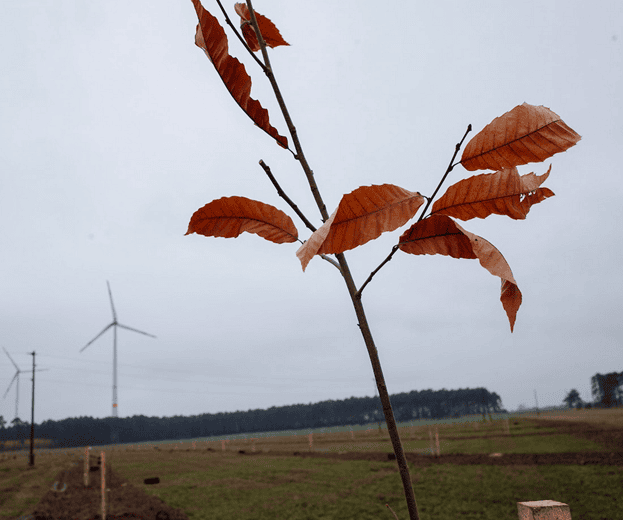
- 78 chestnut trees
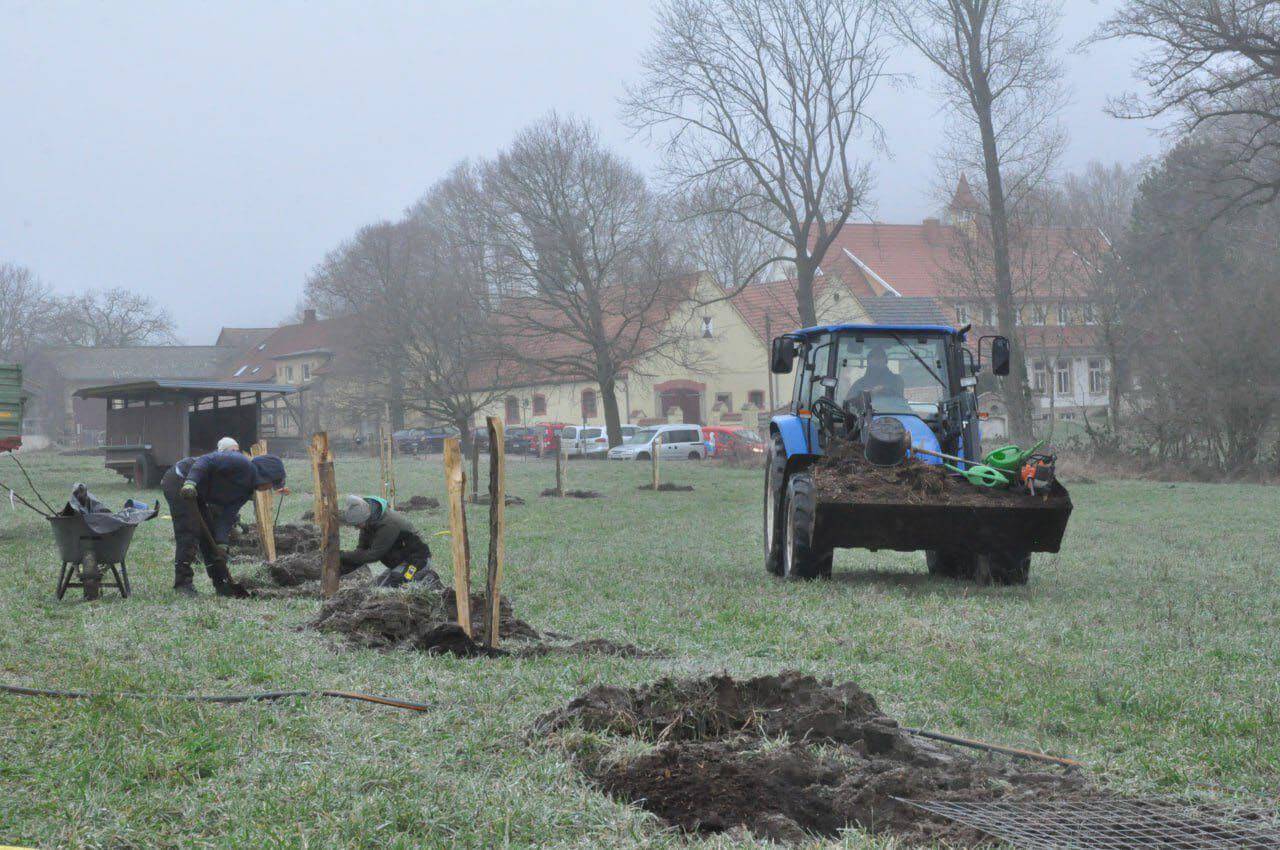
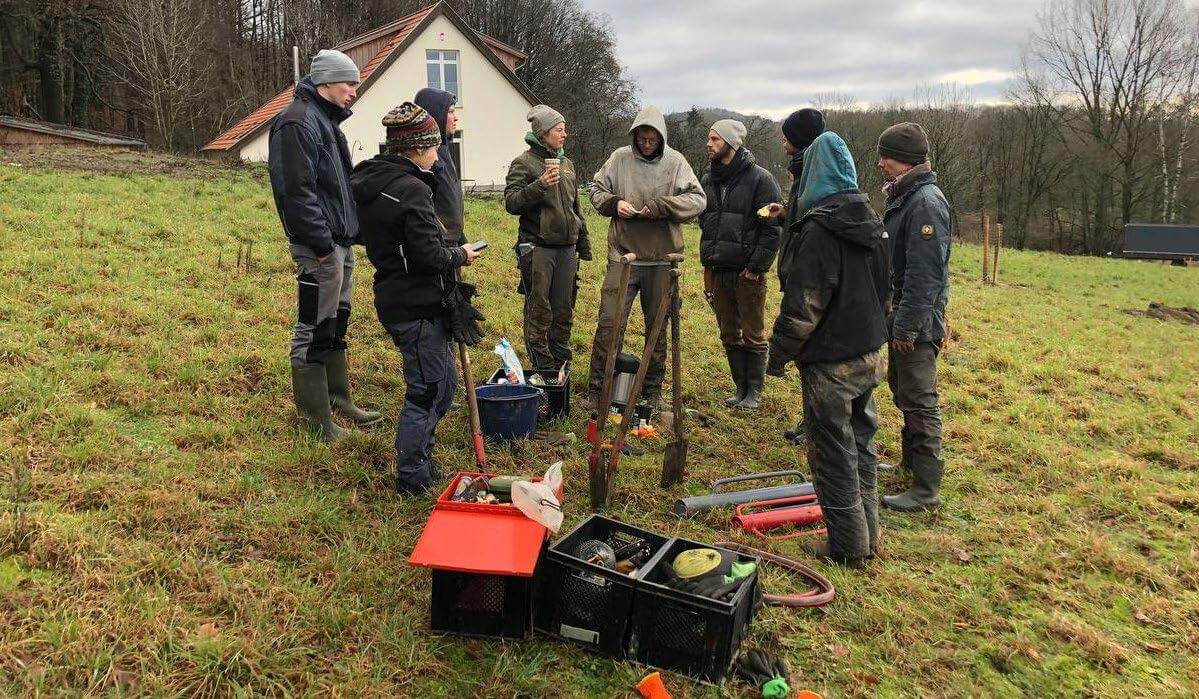
In the future, these trees will provide more shade, erosion protection, and carbon reduction to the landscape of the Tecklenburg region. Knowledge about the opportunities trees in the agricultural landscape offer for climate and nature conservation was also imparted to the helping hands of all age groups. Among others, students from a project school class and students from the nearby University of Münster helped on all three days. The area will continue to be monitored for its ecosystem services with regard to biodiversity and vitality as part of the citizen science “Agroforestry Monitoring.”
The 3-day planting campaign was led by the Resilia tree nursery team and technically supported by a local farmer. The “Haus Hülshoff” farm provided accommodation and catering for the volunteers. Räume eröffnen e.V. organised evening theory sessions to provide background information and explain the importance of the agroforestry system. Originally from warm southern Europe, the walnut and chestnut should be able to cope well with the increasing drought, thanks in part to their ability to grow deep roots, and are therefore also regarded as “climate trees” for Germany.
Positive effects of the agroforestry system:
- Creation of habitat for plants and animals
- Reduction of dehydration and erosion
- Even distribution of rainwater
- Protection of the groundwater replenishment capacity
- Strengthening of biodiversity