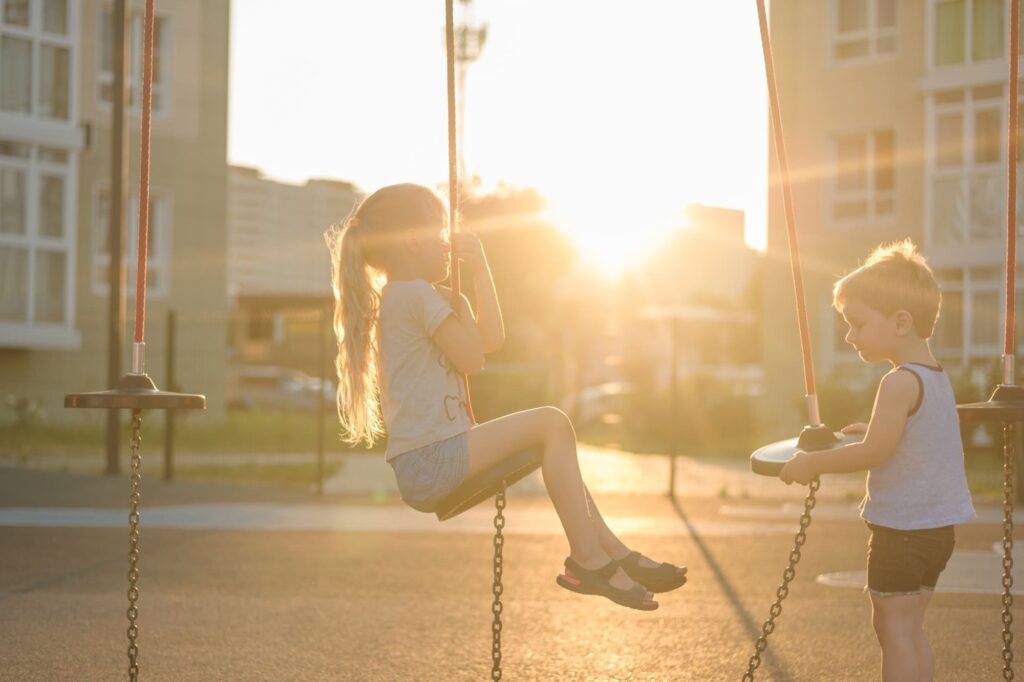
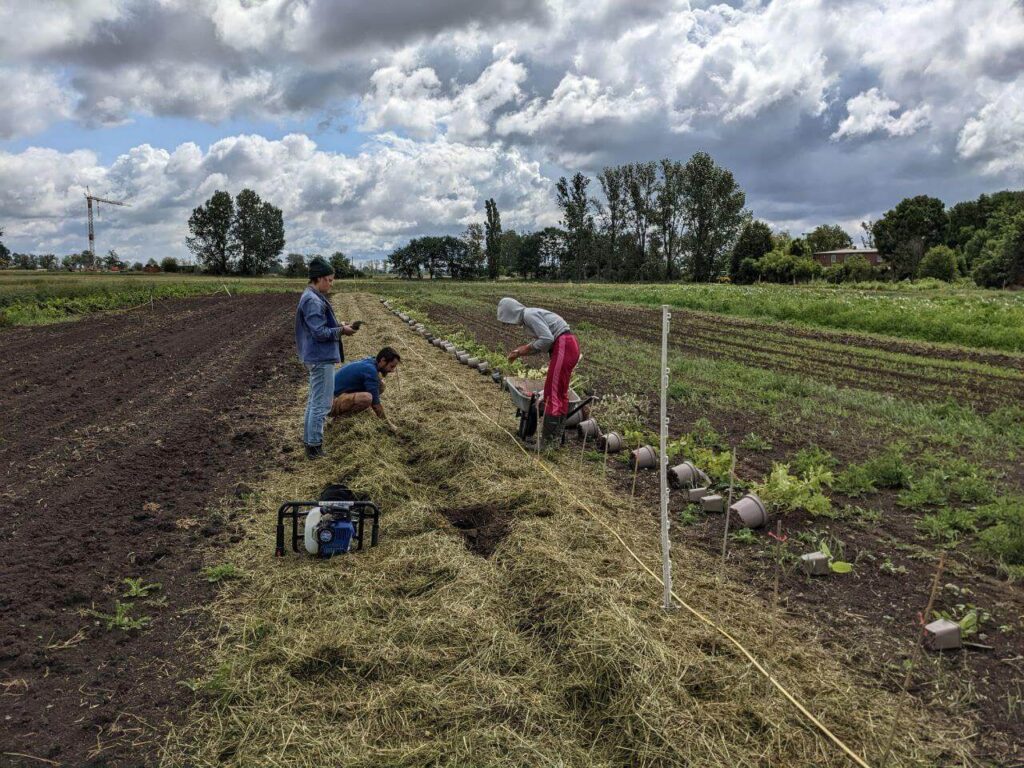
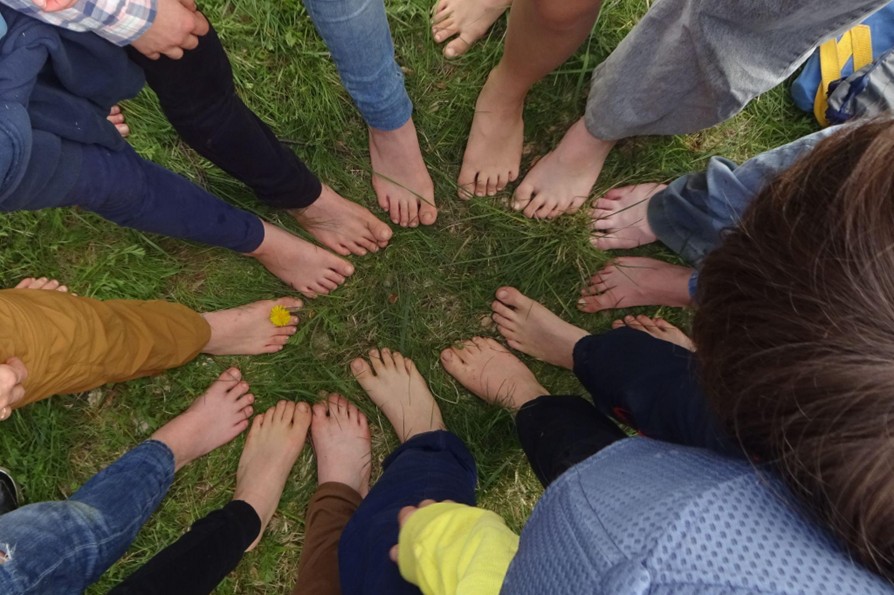
 We feel our best when we spend time in nature. A walk in the green can help us through stressful times. Time outdoors even helps prevent illness—that’s why we start with children. In collaboration with wilderness educators, we enable Berlin primary school children to take monthly trips to city parks or nearby forests. Outdoor Time stands for a connection with nature, creativity, and equal opportunities. And the kids have an absolute blast!
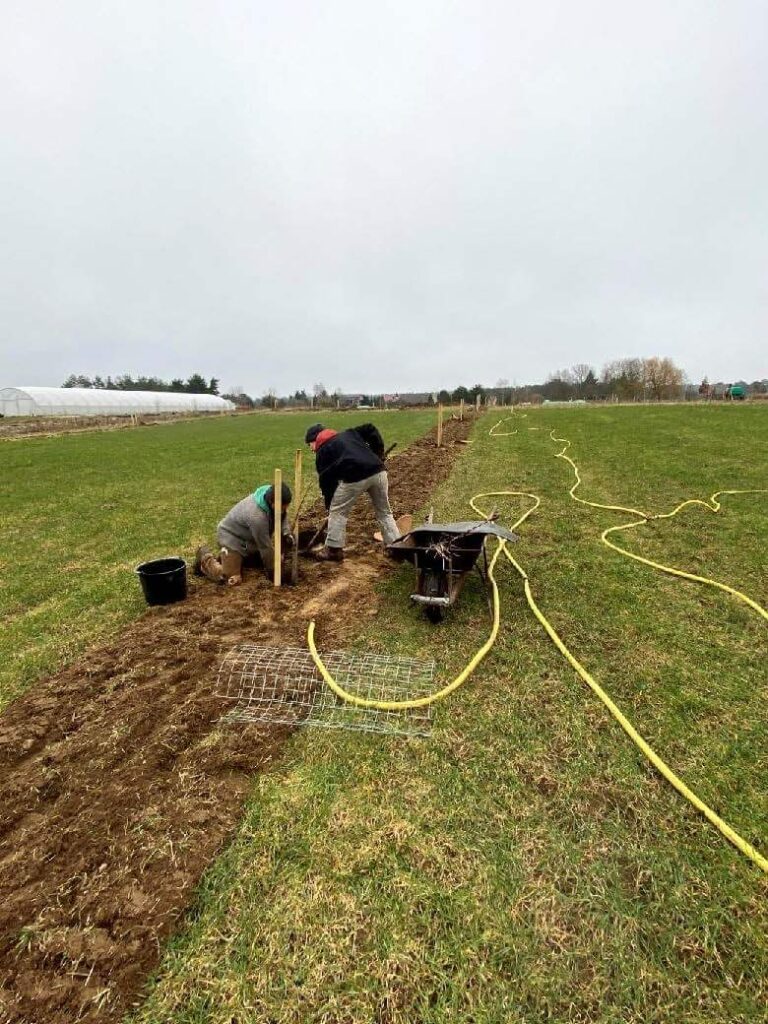
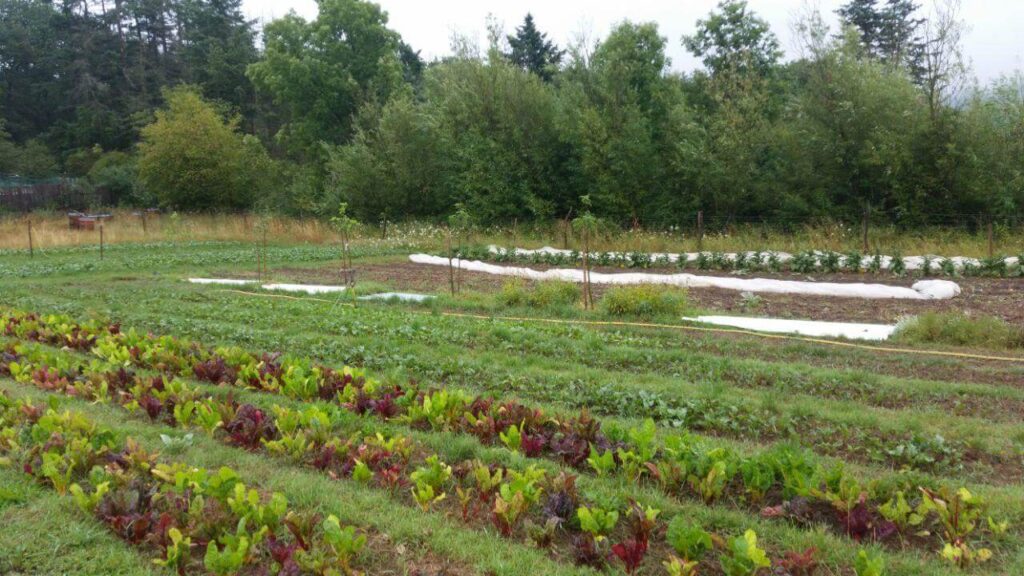
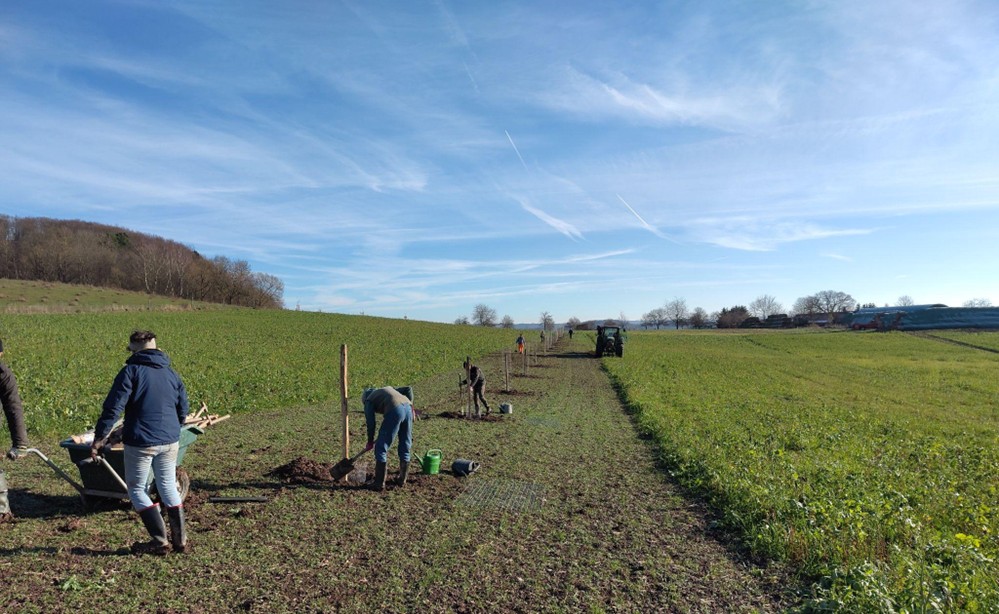 Another exciting topic: Food. Most people love good food. But to produce it, we need healthy, fertile soils—rich in nutrients and teeming with life. Soils that can absorb water and withstand droughts. With a growing population and diverse interests, we must use and manage our land thoughtfully and responsibly. Agroforestry brings many of these interests together. It supports the production of healthy food while also protecting soil, biodiversity, and even offering recreational spaces.
You might be wondering why all of this is necessary
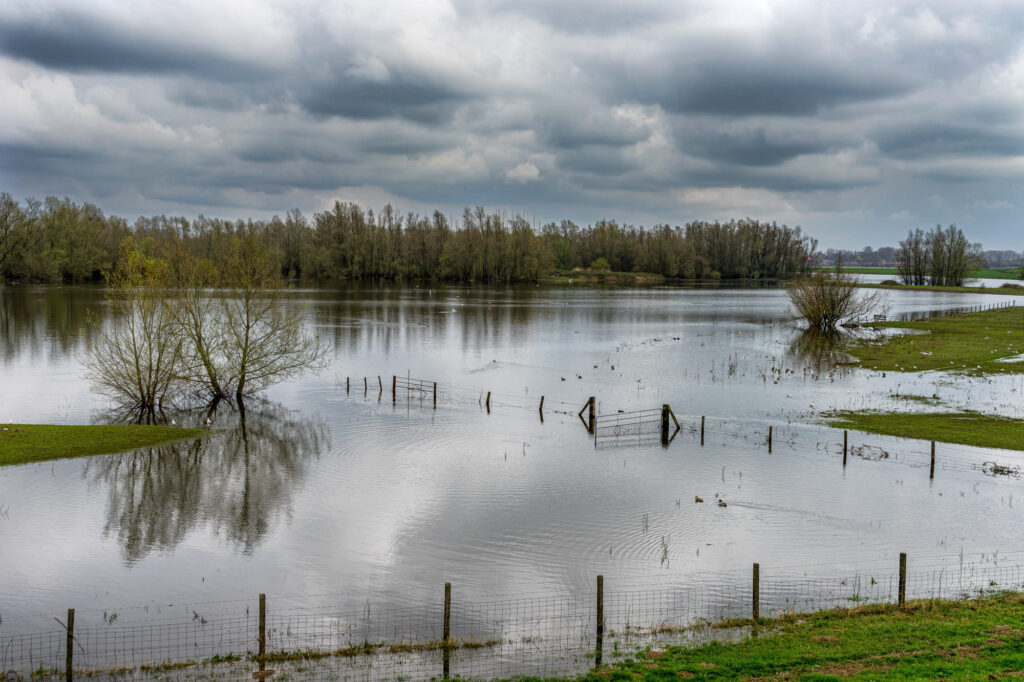
There’s a lot of talk about rising temperatures. Some of the discussion might sound abstract and even very scientific. But perhaps some of the following everyday examples feel familiar to you?